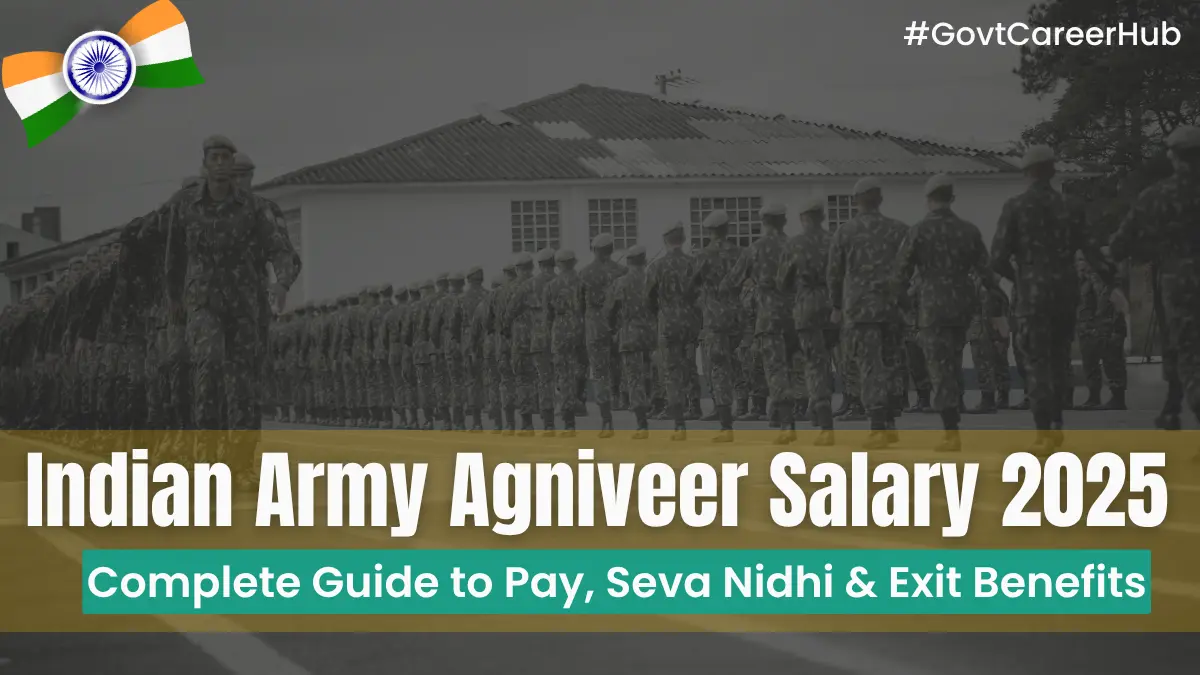
The Agnipath scheme has revolutionized recruitment in the Indian Armed Forces, and many young candidates are curious about the financial aspects of serving as an Agniveer in the Indian Army. Understanding the salary structure, allowances, and long-term benefits is crucial for making an informed decision about your military career.
For official information about the Agnipath scheme, candidates should refer to the Indian Army’s official website and the Ministry of Defence portal.
In this comprehensive guide, we’ll break down everything you need to know about Agniveer compensation package, from monthly in-hand salary to the exit package after four years of service.
What is the Basic Salary Structure for Army Agniveers in 2025?
The Agniveer salary structure follows a progressive increment model over the four-year service period. Here’s the detailed breakdown:
Year-wise Basic Pay Structure:
- 1st Year: ₹30,000 per month
- 2nd Year: ₹33,000 per month
- 3rd Year: ₹36,000 per month
- 4th Year: ₹40,000 per month
This structured increment ensures that Agniveers receive regular pay hikes throughout their service tenure, reflecting their growing experience and responsibilities within the Indian Army.
Read Also: What is Agniveer Scheme? Full Details About Agnipath Yojana for Defence Aspirants
Monthly In-hand Salary Calculation for Agniveers
Many candidates want to understand their actual take-home salary after all deductions. The in-hand salary depends on various factors including allowances, deductions, and posting location.
Typical Monthly In-hand Salary Range:
- 1st Year: ₹21,000 – ₹23,000
- 2nd Year: ₹23,500 – ₹25,500
- 3rd Year: ₹26,000 – ₹28,000
- 4th Year: ₹28,500 – ₹31,000
The variation in in-hand salary occurs due to different allowances based on posting locations, field areas, and operational requirements.

Complete List of Allowances for Indian Army Agniveers
Agniveers are entitled to various allowances that significantly enhance their overall compensation package:
Location-based Allowances
Dearness Allowance (DA): Currently applicable as per central government rates High Altitude Allowance: For postings in mountainous regions like Ladakh and Siachen Field Area Allowance: Additional compensation for border postings and operational areas Station Allowance: Varies based on posting location classification
Operational Allowances
Risk and Hardship Allowance: For high-risk operational duties Technical Allowance: For specialized technical roles and equipment handling Flying Allowance: For Agniveers involved in aviation-related duties
Welfare Allowances
Ration Allowance: Subsidized food and mess facilities Clothing Allowance: Annual uniform and equipment maintenance Medical Allowance: Comprehensive healthcare coverage
Important Note on Allowances:
The monthly salary for Indian Army Agniveers is fixed at ₹30,000 and does not include traditional allowances like DA (Dearness Allowance), HRA (House Rent Allowance), or TA (Travel Allowance) that are typically provided to regular army personnel. However, Agniveers do receive specific allowances based on operational requirements and posting locations.
Understanding the Seva Nidhi Fund – Your Retirement Corpus
The Seva Nidhi fund is a unique feature of the Agnipath scheme, designed to provide financial security to Agniveers after their four-year service period. According to latest updates, Agniveers receive approximately ₹11.71 lakhs as the Seva Nidhi package after completing their 4-year tenure.
How Seva Nidhi Works:
Monthly Contribution: 30% of basic salary is contributed to Seva Nidhi Government Matching: Indian Government contributes an equal amount Interest Component: The fund earns interest at competitive rates
Seva Nidhi Calculation Example:
For an Agniveer serving the complete four-year tenure:
Year 1: ₹9,000 × 12 months = ₹1,08,000 (Agniveer contribution) Year 2: ₹9,900 × 12 months = ₹1,18,800 (Agniveer contribution) Year 3: ₹10,800 × 12 months = ₹1,29,600 (Agniveer contribution) Year 4: ₹12,000 × 12 months = ₹1,44,000 (Agniveer contribution)
Total Agniveer Contribution: ₹5,00,400 Government Matching Contribution: ₹5,00,400 Interest Earned: Approximately ₹1,00,000 – ₹1,50,000
Total Seva Nidhi Corpus: ₹11.71 lakhs (tax-free)
Note: The actual Seva Nidhi amount is standardized at ₹11.71 lakhs as per the latest government notifications, regardless of the calculated contributions, ensuring a guaranteed exit benefit for all Agniveers.
This substantial corpus provides excellent financial foundation for post-military career planning.
Comprehensive Exit Package and Benefits After 4 Years
The exit package for Agniveers includes multiple components designed to facilitate smooth transition to civilian life:
Financial Benefits:
Seva Nidhi Payout: ₹11.71 lakhs (tax-free guaranteed amount) Insurance Coverage: ₹48 lakhs life insurance coverage during service Gratuity Equivalent: Additional lump sum payment Leave Encashment: Payment for unutilized earned leave
Career Transition Support:
Skill Certification: Industry-recognized certificates for acquired military skills through partnerships with Skill India and other vocational training institutions Higher Education Opportunities: Reserved seats in various educational institutions including DU, JNU, and other central universities Employment Preference: Priority in central government job applications through UPSC and SSC recruitment Entrepreneurship Support: Access to business loan schemes through MUDRA and startup incubators under Startup India
Continued Benefits:
Medical Coverage: Extended healthcare benefits for certain period Canteen Facilities: Continued access to military canteen stores Club Membership: Access to select military recreational facilities
Additional Financial Benefits During Service
Beyond salary and allowances, Agniveers enjoy several financial perks:
Insurance Coverage: Comprehensive life and disability insurance Travel Concessions: Free railway travel for self and family Education Support: Financial assistance for children’s education Housing: Free accommodation in military establishments Recreation Facilities: Access to sports complexes, clubs, and entertainment venues
Read Also: Indian Army Agniveer Selection Process 2025: Step-by-Step Guide
Tax Implications and Savings
Understanding the tax benefits can help Agniveers optimize their financial planning:
Tax-free Components:
- Seva Nidhi contributions and interest
- Certain operational allowances
- Medical reimbursements
Tax Optimization Tips:
- Utilize Section 80C deductions through additional investments
- Plan insurance purchases for tax benefits
- Consider voluntary provident fund contributions
Career Progression Opportunities Post-Agniveer
After completing the four-year tenure, Agniveers have multiple pathways:
Military Career Continuation:
Regular Commission: 25% of Agniveers can apply for permanent commission Selection Process: Based on performance, merit, and organizational requirements Career Growth: Opportunity to become commissioned officers
Civilian Career Options:
Central Government Jobs: Age relaxation and preference in recruitment through Employment News and Rozgar Samachar State Government Positions: Many states offer reservation for ex-servicemen – check your state’s employment portal Private Sector: Military skills highly valued in security, logistics, and management roles through platforms like Naukri and Indeed Self-Employment: Business opportunities with government support schemes through KVIC and NSIC
Comparison with Traditional Military Recruitment
Understanding how Agniveer compensation compares with regular military recruitment:
Advantages of Agniveer Scheme:
- Faster financial growth in initial years
- Substantial exit corpus through Seva Nidhi
- Modern skill development opportunities
- Flexibility to choose civilian career after four years
Traditional Recruitment Benefits:
- Long-term career security
- Pension after retirement
- Gradual promotion structure
- Extended service tenure
Financial Planning Tips for Agniveers
To maximize the benefits of Agniveer salary and allowances:
During Service:
Budget Management: Maintain detailed monthly expense tracking Investment Strategy: Invest surplus funds in mutual funds through AMFI registered platforms or fixed deposits with nationalized banks Skill Development: Use allowances to pursue additional certifications through NIELIT or IGNOU Emergency Fund: Maintain 6-months expense reserve in Post Office Savings or bank savings accounts
Post-Service Planning:
Seva Nidhi Utilization: Plan investment through SBI or other nationalized banks’ investment schemes Education Investment: Consider using corpus for higher studies through UGC recognized universities Career Transition: Invest in skill upgradation through NSDC certified courses Real Estate: Consider property investment with guidance from CREDAI registered developers
State-wise Variations and Regional Considerations
Agniveer salary components may vary based on posting locations:
Metro City Postings: Higher station allowances and dearness allowance Border Area Postings: Additional hardship and risk allowances Field Formations: Enhanced field area and operational allowances Peacetime Stations: Standard allowance structure
Future Salary Revisions and Updates
The Agniveer salary structure is subject to periodic revisions based on:
Pay Commission Recommendations: Central government pay revision cycles Inflation Adjustments: Dearness allowance modifications Operational Requirements: Special allowance modifications Performance-based Increments: Merit-based additional benefits
Common Myths and Facts About Agniveer Salary
Myth: Agniveers receive lower compensation than regular soldiers Fact: Initial salary is competitive, and the Seva Nidhi corpus provides substantial long-term benefits
Myth: No pension means financial insecurity Fact: Seva Nidhi fund creates a significant retirement corpus equivalent to pension benefits
Myth: Limited career growth opportunities Fact: Multiple pathways exist for both military and civilian career advancement
Conclusion: Making an Informed Decision
The Indian Army Agniveer salary package offers a compelling mix of immediate financial benefits and long-term security through the Seva Nidhi scheme. With monthly in-hand salaries ranging from ₹21,000 to ₹31,000 and a substantial exit corpus of over ₹11 lakhs, the scheme provides excellent financial foundation for young Indians.
The combination of competitive salary, comprehensive allowances, skill development opportunities, and career flexibility makes the Agniveer scheme an attractive option for those seeking to serve the nation while building a secure financial future.
Before making your decision, carefully consider your long-term career goals, financial responsibilities, and personal aspirations. The Agnipath scheme represents a modern approach to military service that balances national service with individual career development.
Read Also: What is Agniveer Scheme? Full Details About Agnipath Yojana for Defence Aspirants
Frequently Asked Questions (FAQs) About Agniveer Salary 2025
For the latest updates on Agniveer recruitment, salary revisions, and application procedures, regularly check the Indian Army official website, Ministry of Defence notifications, and authorized recruitment portals like Sena Bharti.
Additional Resources:
- Agnipath Scheme Official Details – PIB
- Veterans Affairs – Department of Ex-Servicemen Welfare
- AFPP (Armed Forces Preparatory Program)
These articles might be helpful:
- Army related Jobs Notification
- Army Exam Preparation Plan
Disclaimer: Salary figures and allowances mentioned are based on current government notifications and may be subject to periodic revisions. Candidates are advised to verify the latest information from official sources before making career decisions.