
Quick Overview: Agriculture competition exams in India offer lucrative career opportunities in government and private sectors. With over 50+ exams conducted annually including ICAR ARS, NABARD Grade A, and state-level ADO positions, success requires systematic preparation covering agronomy, soil science, agricultural economics, and current government schemes. Average salary ranges from ₹35,000-₹80,000 per month with excellent growth prospects.
The agriculture sector in India is experiencing unprecedented growth, creating numerous opportunities for young professionals. With the government’s focus on sustainable farming, agri-tech innovations, and rural development, agriculture competition exams have become increasingly popular among aspirants seeking rewarding careers in this vital sector.
Whether you’re a fresh graduate or looking to transition into agriculture-related roles, this comprehensive guide will help you navigate the landscape of agricultural competitive examinations and secure your dream position.
Understanding Agriculture Competition Exams
Agriculture competition exams are specialized recruitment tests conducted by various government bodies, research institutions, and agricultural organisations to select candidates for positions in agricultural sciences, farming technology, rural development, and related fields.
These examinations assess candidates’ knowledge of agricultural practices, crop production, soil science, plant breeding, agricultural economics, and modern farming techniques. The scope has expanded significantly to include emerging areas like precision agriculture, organic farming methods, and agricultural biotechnology.
Key Types of Agriculture Competition Exams
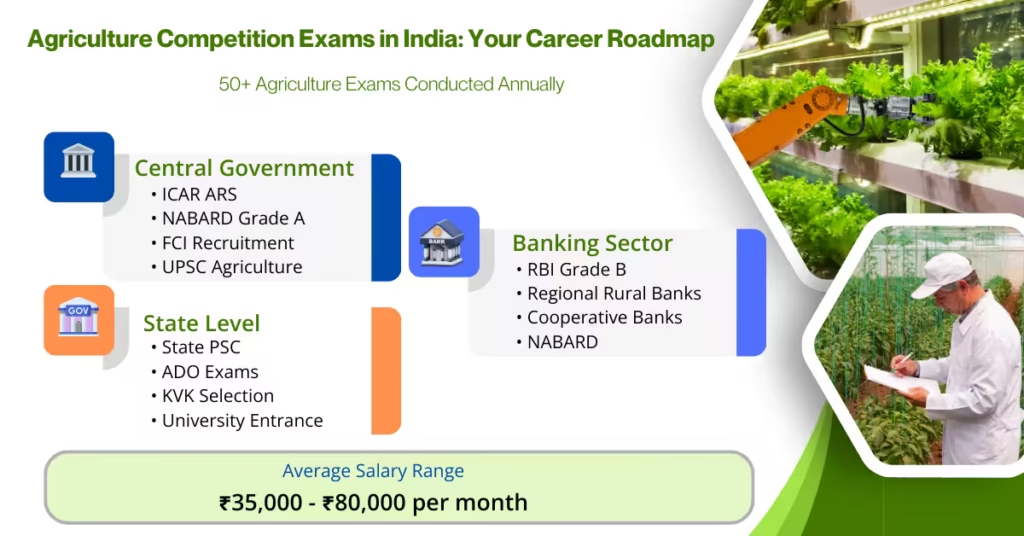
Central Government Examinations:
- ICAR (Indian Council of Agricultural Research) exams for Agricultural Research Service (ARS)
- ICAR AIEEA (All India Entrance Examination) for PG & PhD programmes conducted by National Testing Agency for 2025-26
- NABARD Grade A Agriculture Recruitment 2025 (notification expected around August 2025)
- FCI (Food Corporation of India) recruitment tests
- UPSC Civil Services with Agriculture Optional
State-Level Agricultural Examinations:
- State Public Service Commission exams with agriculture focus
- Agricultural Development Officer (ADO) recruitments
- Krishi Vigyan Kendra selection tests
- State agricultural university entrance exams
Banking and Financial Sector:
- RBI Grade B with agricultural focus
- Regional Rural Bank examinations
- Cooperative bank recruitment tests
Recent Developments and Exam Updates (2025)
ICAR Examination Changes
The Indian Council of Agricultural Research (ICAR) has entrusted the responsibility of conducting All India Entrance Examinations for admission to Masters (PG) & Doctoral (Ph.D) programmes in Agricultural Universities to the National Testing Agency for the academic year 2025-26. This partnership with NTA ensures more standardised and efficient examination processes.
NABARD Grade A Agriculture Updates
NABARD Grade A Agriculture Recruitment 2025 notification is expected to release around August 2025, continuing the bank’s focus on agricultural financing and rural development specialists.
Government Scheme Achievements
The Central Sector Scheme for Formation and Promotion of 10,000 Farmer Producer Organizations (FPOs) has achieved its target, representing a significant milestone in agricultural cooperative development. The PM-KISAN scheme continues with regular installment releases, with the 19th installment released in February 2025, demonstrating the government’s sustained commitment to farmer welfare.
Essential Subjects and Syllabus Coverage
Core Agricultural Sciences
Understanding fundamental agricultural sciences forms the backbone of these examinations. Key areas include:
Agronomy and Crop Production:
- Field crop cultivation techniques
- Cropping systems and sustainable practices
- Irrigation management and water conservation
- Nutrient management in different soil types
Soil Science and Fertility:
- Soil classification and properties
- Soil health assessment methods
- Fertilizer application techniques
- Soil conservation practices
Plant Breeding and Genetics:
- Conventional and modern breeding methods
- Hybrid development techniques
- Genetic improvement of crops
- Seed production technology
Emerging Areas in Agricultural Studies
Agricultural Technology and Mechanisation:
- Farm machinery and equipment
- Precision farming techniques
- Digital agriculture applications
- Post-harvest technology
Agricultural Economics and Marketing:
- Farm economics and cost analysis
- Agricultural marketing systems
- Price policy and market intelligence
- Agricultural finance and credit systems
Environmental Agriculture:
- Climate-smart agriculture
- Organic farming certification
- Biodiversity conservation
- Sustainable farming practices
Preparation Strategy for Agriculture Competition Exams
Building Strong Foundation Knowledge
Start your preparation by strengthening core concepts in agricultural sciences. Focus on understanding rather than rote memorisation. Create comprehensive notes covering all major topics and regularly revise them.
Recommended Study Approach:
- Begin with NCERT textbooks for basic concepts
- Progress to specialized agricultural textbooks
- Incorporate current affairs related to agriculture sector
- Practice previous years’ question papers extensively
Staying Updated with Agricultural Developments
The agriculture sector is rapidly evolving with new government schemes, technological innovations, and policy changes. Regular reading of agricultural magazines, journals, and government publications is crucial.
Key Sources for Current Information:
- Ministry of Agriculture and Farmers Welfare notifications
- ICAR research publications
- Agricultural marketing reports
- State agriculture department updates
Effective Time Management
Agriculture competition exams often have vast syllabi requiring systematic preparation. Create a realistic study schedule that covers all subjects while allowing adequate revision time.
Weekly Study Plan Structure:
- 40% time for core agricultural subjects
- 20% for current affairs and government schemes
- 20% for practice tests and previous papers
- 20% for revision and weak area improvement
Government Schemes and Agricultural Policies
Understanding government initiatives is crucial for agriculture competition exams. Recent schemes focus on doubling farmers’ income, sustainable agriculture, and technological adoption.
Major Agricultural Schemes to Study
Income Support and Credit:
- PM-KISAN Samman Nidhi Yojana with direct benefit transfers (20th installment released in 2025)
- Kisan Credit Card scheme enhancements
- Interest subvention schemes for agriculture
Farmer Producer Organisation Development:
- Central Sector Scheme for Formation and Promotion of 10,000 FPOs successfully completed
- Credit Guarantee Fund (CGF) support for FPOs
- Enhanced focus on collective farming and marketing
Crop Insurance and Risk Management:
- Pradhan Mantri Fasal Bima Yojana (PMFBY)
- Weather-based crop insurance
- Disaster management in agriculture
Infrastructure and Marketing:
- Agriculture Infrastructure Fund with continued expansion
- Formation of 10,000 Farmer Producer Organisations (FPOs) target achieved
- e-NAM platform development and direct marketing initiatives
- Enhanced digital infrastructure for agricultural marketing
Modern Agriculture and Technology Integration
Contemporary agriculture competition exams increasingly focus on technological applications and innovative farming methods.
Digital Agriculture Applications
Precision Agriculture Technologies:
- GPS-guided farming equipment
- Soil testing using mobile applications
- Drone technology for crop monitoring
- Satellite imagery for farm management
Information and Communication Technology:
- Mobile-based agricultural advisory services
- Weather forecasting applications
- Market price information systems
- Online agricultural education platforms
Sustainable Farming Practices
Organic Agriculture Development:
- Organic certification processes
- Natural farming methods
- Biological pest management
- Composting and organic inputs
Climate Resilient Agriculture:
- Drought-resistant crop varieties
- Water-efficient irrigation systems
- Carbon farming techniques
- Renewable energy in agriculture
Career Opportunities After Agriculture Competition Exams
Success in agriculture competition exams opens diverse career paths in both government and private sectors.
Government Sector Positions
Research and Development Roles:
- Agricultural Research Service scientists
- Extension officers in agricultural departments
- Research associates in ICAR institutes
- Agricultural technology transfer specialists
Administrative and Policy Positions:
- Agricultural Development Officers
- District Collector (Agriculture focus)
- Policy analysts in agriculture ministries
- Project coordinators for agricultural schemes
Private Sector Opportunities
Agribusiness and Corporate Roles:
- Product managers in agricultural companies
- Field officers in fertilizer and seed companies
- Agricultural consultants for farming enterprises
- Quality assurance specialists in food processing
Financial Services:
- Agricultural credit officers in banks
- Risk assessment specialists
- Rural development programme managers
- Microfinance institution leadership roles
Exam Preparation Resources and Study Materials
Essential Books and Publications
Core Agricultural Subjects:
- “Principles of Agronomy” by S.R. Reddy
- “Soil Science” by N.K. Sankhla
- “Plant Breeding” by B.R. Murty
- “Agricultural Economics” by D.N. Dwivedi
Current Affairs and Government Schemes:
- Monthly agricultural magazines
- Annual reports of Ministry of Agriculture and Farmers Welfare
- Economic Survey agriculture chapter available at Union Budget Portal
- State-wise agricultural statistics from Agricultural Statistics Division
Online Learning Platforms
Digital Study Resources:
- ICAR e-learning modules
- Agricultural university online courses
- YouTube channels by agriculture experts
- Mobile applications for agriculture studies
Practice and Assessment Tools:
- Online mock test platforms
- Previous years’ paper collections available at National Testing Agency
- Subject-wise practice questions
- Time-bound assessment tests
Success Tips for Agriculture Competition Exam Aspirants
Developing Effective Study Habits
Create a conducive learning environment that minimises distractions and maximises retention. Use active learning techniques like creating mind maps, summarising topics, and teaching concepts to others.
Daily Study Routine:
- Morning hours for complex theoretical concepts
- Afternoon sessions for current affairs reading
- Evening time for practice questions
- Night revision of the day’s learnings
Building Analytical and Problem-Solving Skills
Agriculture competition exams often include case studies and analytical questions requiring practical application of theoretical knowledge.
Skill Development Activities:
- Analyse agricultural success stories
- Study failed agricultural projects and their causes
- Practice numerical problems in agricultural economics
- Develop solutions for common farming challenges
Managing Exam Stress and Anxiety
Preparation for competitive examinations can be stressful. Maintain a healthy balance between studies and personal well-being.
Stress Management Techniques:
- Regular physical exercise and outdoor activities
- Meditation and relaxation practices
- Adequate sleep and proper nutrition
- Social interaction with fellow aspirants
Future Trends in Agricultural Competitive Examinations
The landscape of agriculture competition exams continues evolving with changing agricultural practices and government priorities.
Emerging Focus Areas
Technology Integration Questions: Expect increased emphasis on artificial intelligence in agriculture, blockchain for supply chain management, and Internet of Things (IoT) applications in farming.
Sustainability and Climate Change: Questions related to carbon sequestration, climate-smart agriculture, and environmental impact assessment are becoming more common.
Entrepreneurship and Innovation: Examinations are incorporating questions about agricultural startups, innovative farming models, and rural entrepreneurship development.
Preparation for Future Challenges
Stay updated with global agricultural trends, international best practices, and emerging technologies. Develop a forward-thinking approach that combines traditional agricultural wisdom with modern scientific methods.
Frequently Asked Questions (FAQs)
Conclusion
Agriculture competition exams offer excellent opportunities for building meaningful careers in India’s most important economic sector. Success requires dedicated preparation, comprehensive understanding of both traditional and modern agricultural practices, and staying current with policy developments.
The key to excelling in these examinations lies in developing a systematic study approach, maintaining consistency in preparation, and cultivating a deep understanding of agricultural sciences beyond mere memorisation.
As India continues its journey towards becoming a global agricultural powerhouse, qualified professionals who clear these competitive examinations will play crucial roles in shaping the future of Indian agriculture. Your success in agriculture competition exams is not just a personal achievement but a contribution to the nation’s food security and rural development goals.
Remember, every successful candidate started their journey with a single step. Begin your preparation today, stay committed to your goals, and approach your studies with confidence and determination. The agriculture sector needs passionate professionals who can drive innovation, implement sustainable practices, and contribute to the welfare of farming communities across India.
Start your preparation journey now, and take the first step towards a rewarding career in agriculture that offers both professional satisfaction and the opportunity to serve the nation’s agricultural development goals.
For more detailed exam-specific strategies, explore our related articles:
- After BSc Agriculture Which Course is Best? Complete Career Roadmap 2025
- Private Jobs after BSc Agriculture Salary: Salary Insights and Career Opportunities in 2025
- MP PAT 2025: Complete Guide to Pre-Agriculture Test (प्री-एग्रीकल्चर टेस्ट) in Madhya Pradesh
- Banking Exams After BSc Agriculture: Your Gateway to a Rewarding Financial Career
- Govt Jobs After BSc Agriculture: Salary, Career Options & Scope
Stay updated with the latest exam notifications and preparation tips by subscribing to our Agriculture Exam Newsletter and following our comprehensive exam guides.